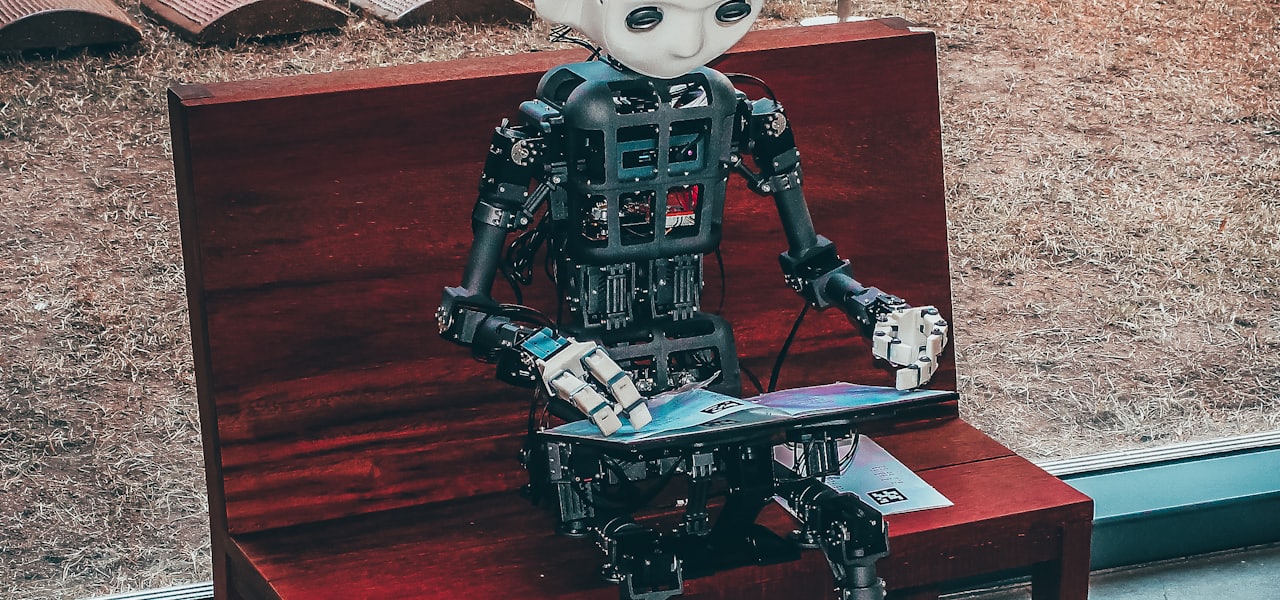
In artificial intelligence research, the situated approach builds agents that are designed to behave effectively successfully in their environment. This requires designing AI "from the bottom-up" by focussing on the basic perceptual and motor skills required to survive. The situated approach gives a much lower priority to abstract reasoning or problem-solving skills. The approach was originally proposed as an alternative to traditional approaches (that is, approaches popular before 1985 or so). After several decades, classical AI technologies started to face intractable issues (e.g. combinatorial explosion) when confronted with real-world modeling problems. All approaches to address these issues focus on modeling intelligences situated in an environment. They have become known as the situated approach to AI. == Emergence of a concept == === From traditional AI to Nouvelle AI === During the late 1980s, the approach now known as Nouvelle AI (Nouvelle means new in French) was pioneered at the MIT Artificial Intelligence Laboratory by Rodney Brooks. As opposed to classical or traditional artificial intelligence, Nouvelle AI purposely avoided the traditional goal of modeling human-level performance, but rather tries to create systems with intelligence at the level of insects, closer to real-world robots. But eventually, at least at MIT new AI did lead to an attempt for humanoid AI in the Cog Project. === From Nouvelle AI to behavior-based and situated AI === The conceptual shift introduced by nouvelle AI flourished in the robotics area, given way to behavior-based robotics (BBR), a methodology for developing AI based on a modular decomposition of intelligence. It was made famous by Rodney Brooks: his subsumption architecture was one of the earliest attempts to describe a mechanism for developing BBAI. It is extremely popular in robotics and to a lesser extent to implement intelligent virtual agents because it allows the successful creation of real-time dynamic systems that can run in complex environments. For example, it underlies the intelligence of the Sony Aibo and many RoboCup robot teams. Realizing that in fact all these approaches were aiming at building not an abstract intelligence, but rather an intelligence situated in a given environment, they have come to be known as the situated approach. In fact, this approach stems out from early insights of Alan Turing, describing the need to build machines equipped with sense organs to learn directly from the real-world instead of focusing on abstract activities, such as playing chess. == Definitions == Classically, a software entity is defined as a simulated element, able to act on itself and on its environment, and which has an internal representation of itself and of the outside world. An entity can communicate with other entities, and its behavior is the consequence of its perceptions, its representations, and its interactions with the other entities. === AI loop === Simulating entities in a virtual environment requires simulating the entire process that goes from a perception of the environment, or more generally from a stimulus, to an action on the environment. This process is called the AI loop and technology used to simulate it can be subdivided in two categories. Sensorimotor or low-level AI deals with either the perception problem (what is perceived?) or the animation problem (how are actions executed?). Decisional or high-level AI deals with the action selection problem (what is the most appropriate action in response to a given perception, i.e. what is the most appropriate behavior?). === Traditional or symbolic AI === There are two main approaches in decisional AI. The vast majority of the technologies available on the market, such as planning algorithms, finite-state machines (FSA), or expert systems, are based on the traditional or symbolic AI approach. Its main characteristics are: It is top-down: it subdivides, in a recursive manner, a given problem into a series of sub-problems that are supposedly easier to solve. It is knowledge-based: it relies on a symbolic description of the world, such as a set of rules. However, the limits of traditional AI, which goal is to build systems that mimic human intelligence, are well-known: inevitably, a combinatorial explosion of the number of rules occurs due to the complexity of the environment. In fact, it is impossible to predict all the situations that will be encountered by an autonomous entity. === Situated or behavioral AI === In order to address these issues, another approach to decisional AI, also known as situated or behavioral AI, has been proposed. It does not attempt to model systems that produce deductive reasoning processes, but rather systems that behave realistically in their environment. The main characteristics of this approach are the following: It is bottom-up: it relies on elementary behaviors, which can be combined to implement more complex behaviors. It is behavior-based: it does not rely on a symbolic description of the environment, but rather on a model of the interactions of the entities with their environment. The goal of situated AI is to model entities that are autonomous in their environment. This is achieved thanks to both the intrinsic robustness of the control architecture, and its adaptation capabilities to unforeseen situations. === Situated agents === In artificial intelligence and cognitive science, the term situated refers to an agent which is embedded in an environment. The term situated is commonly used to refer to robots, but some researchers argue that software agents can also be situated if: they exist in a dynamic (rapidly changing) environment, which they can manipulate or change through their actions, and which they can sense or perceive. Examples might include web-based agents, which can alter data or trigger processes (such as purchases) over the Internet, or virtual-reality bots which inhabit and change virtual worlds, such as Second Life. Being situated is generally considered to be part of being embodied, but it is useful to consider each perspective individually. The situated perspective emphasizes that intelligent behavior derives from the environment and the agent's interactions with it. The nature of these interactions are defined by an agent's embodiment. == Implementation principles == === Modular decomposition === The most important attribute of a system driven by situated AI is that the intelligence is controlled by a set of independent semi-autonomous modules. In the original systems, each module was actually a separate device or was at least conceived of as running on its own processing thread. Generally, though, the modules are just abstractions. In this respect, situated AI may be seen as a software engineering approach to AI, perhaps akin to object oriented design. Situated AI is often associated with reactive planning, but the two are not synonymous. Brooks advocated an extreme version of cognitive minimalism which required initially that the behavior modules were finite-state machines and thus contained no conventional memory or learning. This is associated with reactive AI because reactive AI requires reacting to the current state of the world, not to an agent's memory or preconception of that world. However, learning is obviously key to realistic strong AI, so this constraint has been relaxed, though not entirely abandoned. === Action selection mechanism === The situated AI community has presented several solutions to modeling decision-making processes, also known as action selection mechanisms. The first attempt to solve this problem goes back to subsumption architectures, which were in fact more an implementation technique than an algorithm. However, this attempt paved the way to several others, in particular the free-flow hierarchies and activation networks. A comparison of the structure and performances of these two mechanisms demonstrated the advantage of using free-flow hierarchies in solving the action selection problem. However, motor schemas and process description languages are two other approaches that have been used with success for autonomous robots. == Notes and references == Arsenio, Artur M. (2004) Towards an embodied and situated AI, In: Proceedings of the International FLAIRS conference, 2004. (online) The Artificial Life Route To Artificial Intelligence: Building Embodied, Situated Agents, Luc Steels and Rodney Brooks Eds., Lawrence Erlbaum Publishing, 1995. (ISBN 978-0805815184) Rodney A. Brooks Cambrian Intelligence (MIT Press, 1999) ISBN 0-262-52263-2; collection of early papers including "Intelligence without representation" and "Intelligence without reason", from 1986 & 1991 respectively. Ronald C. Arkin Behavior-Based Robotics (MIT Press, 1998) ISBN 0-262-01165-4 Hendriks-Jansen, Horst (1996) Catching Ourselves in the Act: Situated Activity, Interactive Emergence, Evolution, and Human Thought. Cambridge, Mass.: MIT Press.
Ogle app
Ogle is a free smartphone based social media application. It is available for iOS and Android. Ogle acts like a school wide forum that lets users and users' classmates share and interact. Users can share photos, videos, questions, even thoughts and watch submissions grow in popularity as other users vote and comment on them. == App Features == Campus Feed: Interact by watching and posting videos or pictures to your campus story. Photos and Videos: share what you want with many different timing options. Interact: Chat with friends and groups, or share a moment for all to see. Real-name system: choose to register an account with username and profile picture. Custom Stickers: Create stickers to add creativity and zest to your pictures. Flash Interaction: All private chat and group chat history will be deleted after 24 hours on Ogle Chat. == Controversies == Users can post anything on Ogle using text, photos, and videos. As a result, some Ogle user's sense of anonymity, posts have targeted specific schools and students with abusive and hurtful content. The Ogle app's user anonymity makes it difficult for school officials to quickly investigate issues that occur within the Ogle app. On March 28, 2016, three people were arrested after violent threats were made against an Anaheim high school. 18-year-old Miguel Meza was arrested Sunday afternoon during a traffic stop, along with his passenger, 23-year-old Johnny Aguilar. Police said both men had loaded handguns. Aguilar was also accused of violating his probation. "It is concerning the fact that they did have firearms, but we don't have a crystal ball. We can't determine if they possessed those firearms to engage in some kind of school violence or if they had it for another reason," Sgt. Daron Wyatt with the Anaheim Police Department said. Officials said Meza and Aguilar have known gang ties and detectives began investigating Meza after threats were made against the school on Ogle. On February 29, 2016, Santa Cruz County sheriff's deputies arrested a 16-year-old Aptos High School student Friday, accused of making an online threat of gun violence at Aptos High and Monte Vista Christian."He basically told detectives that it was all a joke. It's not a joke. You have multiple resources being spent to investigate these cases," said Santa Cruz County Sheriff's Sgt. Roy Morales. The schools remained open throughout the week, with a huge police presence on campus. In an anonymous emailed statement to the Daily Pilot on Thursday, the "Ogle team" said: "We are aware of the concern, and cyberbullying is absolutely NOT our intention for the app. Our goal for this app is to create a free and safe community space for students, for a better communication. We are currently working around the clock to improve the app. As a matter of fact, we are also in contact with local police departments, anti-bullying organizations and local high schools to try to help the students." In response to these incidents, Ogle expressed that they takes the safety of its users seriously and does not condone any type of behavior that is illegal or in violation of its content policies. The company also said it has instituted a content moderation team to increase review and identify and remove inappropriate content, and take action against “those who violate our community guidelines.”
Connection string
In computing, a connection string is a string that specifies information about a data source and the means of connecting to it. It is passed in code to an underlying driver or provider in order to initiate the connection. Whilst commonly used for a database connection, the data source could also be a spreadsheet or text file. The connection string may include attributes such as the name of the driver, server and database, as well as security information such as user name and password. == Examples == This example shows a PostgreSQL connection string for connecting to wikipedia.com with SSL and a connection timeout of 180 seconds: DRIVER={PostgreSQL Unicode};SERVER=www.wikipedia.com;SSL=true;SSLMode=require;DATABASE=wiki;UID=wikiuser;Connect Timeout=180;PWD=ashiknoor Users of Oracle databases can specify connection strings: on the command line (as in: sqlplus scott/tiger@connection_string ) via environment variables ($TWO_TASK in Unix-like environments; %TWO_TASK% in Microsoft Windows environments) in local configuration files (such as the default $ORACLE_HOME/network/admin.tnsnames.ora) in LDAP-capable directory services
Psychology in cybersecurity
The psychology of cybersecurity (often intersecting with usable security and cyberpsychology) is an interdisciplinary field studying how human behavior, cognitive biases, and social dynamics influence information security. While traditional cybersecurity focuses on hardware and software vulnerabilities, this discipline addresses the "human factor," which is exploited in cyberattacks. Psychology in cybersecurity draws from cognitive psychology and human–computer interaction. == History and evolution == The challenge of human behavior in computing was noted as early as the 1960s with multi-user mainframes like the Compatible Time-Sharing System (CTSS). In 1966, a software error on CTSS caused the system's master password file to be displayed to every user upon login—one of the earliest documented security incidents attributable to a combination of system design and human factors. These behaviors gained broader significance in the 1990s as the Internet became widely accessible. High-profile incidents involving figures like Kevin Mitnick demonstrated how human trust could be exploited through social engineering such as pretexting over the phone. == Cognitive and behavioral factors == Much of the psychology of cybersecurity focuses on decision-making under stress or uncertainty. Researchers apply frameworks like dual process theory to explain why humans fall for phishing or business email compromise. Threat actors design malicious communications to trigger fast, emotional "System 1" thinking—using urgency, authority, or panic, which prompts users to click a link or wire funds before their analytical "System 2" can assess the situation's legitimacy. Industry research has consistently documented the effectiveness of these techniques at scale, pointing to several recurring psychological phenomena that influence daily security practices: Cognitive biases: The optimism bias leads users to believe they are unlikely to be targeted by cybercriminals, resulting in lax password practices or delayed software updates. The availability heuristic causes individuals to focus on highly publicized, sophisticated threats while ignoring common, statistically probable risks like credential reuse. Social influence: Attackers leverage established principles of persuasion, such as those categorized by Robert Cialdini. Impersonating a CEO leverages the psychological trigger of authority, while fake tech support scams use reciprocity (offering to fix a problem before asking for network credentials). == Neurological and pre-cognitive factors == Functional magnetic resonance imaging (fMRI) studies show that neural activation in visual and attentional regions decreases with repeated exposure to the same stimulus, a phenomenon termed repetition suppression. Experiments have confirmed this effect in the context of security warnings: static warning designs produce declines in user attention and adherence. Information processing research on phishing indicates that affective cues, such as artificial urgency or fear, increase cognitive load and elicit automatic heuristic processing, reducing the likelihood of analytical evaluation and facilitating compliance with malicious requests. == Security fatigue and organizational dynamics == Aggressive cybersecurity postures can sometimes lead to mental and emotional exhaustion, a phenomenon known as security fatigue. === Alert fatigue === One example is alert fatigue, which most frequently affects both end-users and security operations center analysts. Continuous exposure to browser warnings or antivirus pop-ups, particularly those that are false positives, conditions users to dismiss alerts automatically due to the volume of notifications rather than their repetitive appearance (see § Neurological and pre-cognitive factors). The scale of this problem is significant in enterprise: SOC teams in large organizations receive thousands of alerts daily, and a survey published in ACM Computer Surveys found that analysts spend over 25% of their time handling false positives, meaning that malicious indicators can be buried in the noise. === Password fatigue === Similarly, password fatigue is the feeling experienced by many people who are required to remember an excessive number of passwords as part of their daily routine, such as to log in to a computer at work. Users cope with the memory burden by making predictable, iterative changes to their passwords (such as updating "Password01!" to "Password02!"), which decreases password security.
AI content watermarking
AI content watermarking is the process of embedding imperceptible yet detectable signals into content generated by artificial intelligence systems, such as text, images, audio, or video. The technique allows the content to be traced and identified as machine-generated without compromising its quality for the end user. AI watermarking has emerged as a key approach to address growing concerns about misinformation, deepfakes, copyright infringement, and the traceability of synthetic content in the context of the rapid development of generative artificial intelligence. Unlike traditional visible watermarks used in photography, AI content watermarks are typically invisible to humans and can only be detected and deciphered algorithmically. The concept is distinct from the watermarking of AI models themselves (to prevent model theft) and from the watermarking of training data (to combat unauthorized data use). Modern AI watermarking schemes are typically formalized as a pair of algorithms, an embedding (or generation) algorithm and a detection algorithm, sharing a secret key, whose performance is evaluated along three competing axes: quality (the watermark must not noticeably degrade outputs), detectability (the watermark must be statistically distinguishable from unwatermarked content), and robustness (the watermark must persist under adversarial or incidental modifications). == Background == Digital watermarking has been used for decades to protect physical and digital media, from paper currency to photographs. Classical schemes typically embedded a fixed bit-string into a fixed cover signal, with robustness criteria defined against a small fixed set of distortions such as JPEG compression or additive Gaussian noise. The rapid advancement of generative AI in the early 2020s, however, created a new and qualitatively different demand: rather than protecting a single artifact, watermarks for AI content must be embedded automatically across an open-ended distribution of generated outputs while remaining robust to a much wider class of adversarial transformations, including paraphrasing, image regeneration via diffusion models, and re-recording. Large image generation models such as DALL-E, Stable Diffusion, and Midjourney, along with large language models like ChatGPT, made it possible to produce highly realistic synthetic text, images, audio, and video at scale, raising significant ethical and security concerns. In July 2023, the Biden administration secured voluntary commitments from leading AI companies, including OpenAI, Alphabet, Meta, and Amazon, to develop watermarking and other provenance technologies to help users identify AI-generated content. == Formal definitions and design goals == Most modern AI watermarking schemes can be formalized as a pair of algorithms ( W m , D e t e c t ) {\displaystyle ({\mathsf {Wm}},{\mathsf {Detect}})} parameterized by a secret key k {\displaystyle k} . The embedding algorithm W m {\displaystyle {\mathsf {Wm}}} takes a generative model M {\displaystyle M} (and optionally a prompt) and returns a watermarked output x {\displaystyle x} ; the detection algorithm D e t e c t ( x , k ) {\displaystyle {\mathsf {Detect}}(x,k)} outputs a real-valued score (typically a p-value or log-likelihood ratio) used to decide whether x {\displaystyle x} was produced by the watermarked generator. The literature evaluates such schemes along several largely conflicting criteria: Criteria for evaluation include imperceptibility or quality preservation, measured for text via perplexity and human preference judgments, and for images and audio via metrics such as PSNR, SSIM, LPIPS, or PESQ. Detectability is typically expressed as the true positive rate at a fixed false positive rate (e.g. 1% or 10^-6), or as the number of tokens or pixels needed to reach a given confidence level. Robustness refers to the requirement that the watermark should survive expected modifications like JPEG or MP3 compression, cropping, noise, paraphrasing, or machine translation. Distortion-freeness is a stronger property requiring that the marginal distribution of any single watermarked output be statistically identical to the unwatermarked model's distribution. Schemes due to Aaronson, Christ et al., and Kuditipudi et al. are distortion-free in this sense, while the original Kirchenbauer et al. scheme is not. Forgery resistance or unforgeability means an adversary without the secret key should be unable to produce content that passes detection. == Techniques == AI watermarking techniques vary significantly depending on the type of content being watermarked. At its core, the process involves two main stages: embedding (or encoding) the watermark, and detection. There are two primary methods for embedding: watermarking during content generation, which requires access to the AI model itself but is generally more robust, and post-generation watermarking, which can be applied to content from any source, including closed-source models. Watermarks can be broadly classified as visible, including overt marks such as logos or text overlays, or imperceptible, which are detectable only by algorithms. They can also be classified by durability: robust watermarks are designed to withstand common transformations such as compression, cropping, and re-encoding, while fragile watermarks are easily destroyed by any alteration, making them useful for tamper detection. A further axis distinguishes zero-bit watermarks, which only signal "this content was generated by model M," from multi-bit watermarks, which embed an arbitrary payload (such as a user identifier) that can be recovered at detection time. === Text === Text watermarking is considered one of the most challenging modalities because natural language offers relatively limited redundancy compared to images or audio. Modern approaches for large language models alter the autoregressive sampling process so that some statistical signature is left in the choice of tokens, while leaving the surface form of the text unchanged. The literature distinguishes three main families of generation-time text watermarks. Logit-biasing schemes (e.g. KGW) add a fixed bias δ {\displaystyle \delta } to a pseudorandomly selected subset of vocabulary logits before softmax sampling. Reweighting or sampling-based schemes (e.g. SynthID-Text) compose multiple pseudorandom tournaments over the model's full distribution. Distortion-free schemes based on the Gumbel-max trick or inverse transform sampling (Aaronson 2022; Kuditipudi et al. 2023; Christ et al. 2024) preserve the marginal output distribution of the model. ==== KGW: token-probability shifting ==== The pioneering "green list / red list" scheme of Kirchenbauer et al. (KGW), introduced at ICML 2023, is the foundation for most subsequent text watermarks. At each decoding step t {\displaystyle t} , a pseudorandom function (PRF) keyed by a secret k {\displaystyle k} is applied to a context window of h {\displaystyle h} previous tokens to deterministically partition the vocabulary V {\displaystyle V} of size N {\displaystyle N} into a "green list" G ⊂ V {\displaystyle G\subset V} of size γ N {\displaystyle \gamma N} and its complement, the "red list" R = V ∖ G {\displaystyle R=V\setminus G} , where γ ∈ ( 0 , 1 ) {\displaystyle \gamma \in (0,1)} (typically γ = 1 / 2 {\displaystyle \gamma =1/2} ) is the green fraction. A logits processor then increments every green-list logit by a fixed bias δ > 0 {\displaystyle \delta >0} before softmax: ℓ v ′ = ℓ v + δ ⋅ 1 [ v ∈ G ] {\displaystyle \ell '_{v}=\ell _{v}+\delta \cdot \mathbf {1} [v\in G]} so that, after sampling, green tokens are over-represented but generation is not constrained to green tokens alone; high-entropy positions tolerate the bias gracefully, while low-entropy positions (where one token dominates the logits) override the watermark and preserve correctness on factual content. Detection requires only the secret key and the candidate text, not the language model itself. The detector recomputes the partition g ( ⋅ ) {\displaystyle g(\cdot )} for each token, counts the number of green hits | G | hits {\displaystyle |G|_{\text{hits}}} in a sequence of length T {\displaystyle T} , and computes a one-proportion z-test statistic: z = | G | hits − γ T T γ ( 1 − γ ) {\displaystyle z={\frac {|G|_{\text{hits}}-\gamma T}{\sqrt {T\gamma (1-\gamma )}}}} Under the null hypothesis that the text was written by an unwatermarked source (human or another model), the green-hit count is approximately binomially distributed with mean γ T {\displaystyle \gamma T} ; a large positive z {\displaystyle z} rejects the null hypothesis. The original paper reports that fewer than 25 watermarked tokens are sufficient to detect a watermark with a false positive rate below 10^-5 on the OPT-1.3B model. A follow-up study by the same group documented robustness under temperature sampling, top-p (nucleus) sampling, and human paraphrasing, and proposed sliding-window
Cognitive philology
Cognitive philology is the science that studies written and oral texts as the product of human mental processes. Studies in cognitive philology compare documentary evidence emerging from textual investigations with results of experimental research, especially in the fields of cognitive and ecological psychology, neurosciences and artificial intelligence. "The point is not the text, but the mind that made it". Cognitive Philology aims to foster communication between literary, textual, philological disciplines on the one hand and researches across the whole range of the cognitive, evolutionary, ecological and human sciences on the other. Cognitive philology: investigates transmission of oral and written text, and categorization processes which lead to classification of knowledge, mostly relying on the information theory; studies how narratives emerge in so called natural conversation and selective process which lead to the rise of literary standards for storytelling, mostly relying on embodied semantics; explores the evolutive and evolutionary role played by rhythm and metre in human ontogenetic and phylogenetic development and the pertinence of the semantic association during processing of cognitive maps; Provides the scientific ground for multimedia critical editions of literary texts. Among the founding thinkers and noteworthy scholars devoted to such investigations are: Alan Richardson: Studies Theory of Mind in early-modern and contemporary literature. Anatole Pierre Fuksas Benoît de Cornulier David Herman: Professor of English at North Carolina State University and an adjunct professor of linguistics at Duke University. He is the author of "Universal Grammar and Narrative Form" and the editor of "Narratologies: New Perspectives on Narrative Analysis". Domenico Fiormonte François Recanati Gilles Fauconnier, a professor in Cognitive science at the University of California, San Diego. He was one of the founders of cognitive linguistics in the 1970s through his work on pragmatic scales and mental spaces. His research explores the areas of conceptual integration and compressions of conceptual mappings in terms of the emergent structure in language. Julián Santano Moreno Luca Nobile Manfred Jahn in Germany Mark Turner Paolo Canettieri
Linux color management
Linux color management has the same goal as the color management systems (CMS) for other operating systems, which is to achieve the best possible color reproduction throughout an imaging workflow from its source (camera, video, scanner, etc.), through imaging software (Digikam, darktable, RawTherapee, GIMP, Krita, Scribus, etc.), and finally onto an output medium (monitor, video projector, printer, etc.). In particular, color management attempts to enable color consistency across media and throughout a color-managed workflow. Linux color management relies on the use of accurate ICC (International Color Consortium) and DCP (DNG Color Profile) profiles describing the behavior of input and output devices, and color-managed applications that are aware of these profiles. These applications perform gamut conversions between device profiles and color spaces. Gamut conversions, based on accurate device profiles, are the essence of color management. Historically, color management was not an initial design consideration of the X Window System on which much of Linux graphics support rests, and thus color-managed workflows have been somewhat more challenging to implement on Linux than on other OS's such as Microsoft Windows or macOS. This situation is now being progressively remedied, and color management under Linux, while functional, has not yet acquired mature status. Although it is now possible to obtain a consistent color-managed workflow under Linux, certain problems still remain: The absence of a central user control panel for color settings. Some hardware devices for color calibration lack Linux drivers, firmware or accessory data. Since ICC color profiles are written to an open specification, they are compatible across operating systems. Hence, a profile produced on one OS should work on any other OS given the availability of the necessary software to read it and perform the gamut conversions. This can be used as a workaround for the lack of support for certain spectrophotometers or colorimeters under Linux: one can simply produce a profile on a different OS and then use it in a Linux workflow. Additionally, certain hardware, such as most printers and certain monitors, can be calibrated under another OS and then used in a fully color-managed workflow on Linux. The popular Ubuntu Linux distribution added initial color management in the 11.10 release (the "Oneiric Ocelot" release). == Requirements for a color-managed workflow == Accurate device profiles obtained with source or output characterization software. Correctly loaded video card lookup tables (LUTs) (or monitor profiles that do not require LUT adjustments). Color-managed applications that are configured to use a correct monitor profile and input/output profiles, with support for control over the rendering intent and black point compensation. Calibration and profiling requires: for input devices (scanner, camera, etc.) a color target which the profiling software will compare to the manufacturer-provided color values of the target. or for output devices (monitor, printer, etc.) a reading with a specific device (spectrophotometer, colorimeter or spectrocolorimeter) of the color patch values and comparing the measured values against the values originally sent for output. === Monitor calibration and profiling === One of the critical elements in any color-managed workflow is the monitor, because, at one step or another, handling and making color adaptation through imaging software is required for most images, thus the ability of the monitor to present accurate colors is crucial. Monitor color management consists of calibration and profiling. The first step, calibration, is done by adjusting the monitor controls and the output of the graphics card (via calibration curves) to match user-definable characteristics, such as brightness, white point and gamma. The calibration settings are stored in a .cal file. The second step, profiling (characterization), involves measuring the calibrated display's response and recording it in a color profile. The profile is stored in an .icc file ("ICC file"). For convenience, the calibration settings are usually stored together with the profile in the ICC file. Note that .icm files are identical to .icc files - the difference is only in the name. Seeing correct colors requires using a monitor profile-aware application, together with the same calibration used when profiling the monitor. Calibration alone does not yield accurate colors. If a monitor was calibrated before it was profiled, the profile will only yield correct colors when used on the monitor with the same calibration (the same monitor control adjustments and the same calibration curves loaded into the video card's lookup table). macOS has built-in support for loading calibration curves and installing a system-wide color profile. Windows 7 onward allows loading calibration curves, though this functionality must be enabled manually. Linux and older versions of Windows require using a standalone LUT loader. === Device profiles === ICC profiles are cross-platform and can thus be created on other operating systems and used under Linux. Monitor profiles, however, require some additional attention. Since a monitor profile depends both on the monitor itself and on the video card, a monitor profile should only be used with the same monitor and video card with which it was created. The monitor settings should not be adjusted after creating the profile. In addition, since most calibration software use LUT adjustments during calibration, the corresponding LUTs must be loaded every time the display server (X11, Wayland) is started (e.g. with every graphical login). In the unlikely case of a colorimeter being unsupported by Linux, a profile created under Windows or macOS can be used under Linux. === Display-channel lookup tables === There are two approaches to loading display channel LUTs: Create a profile that does not modify video card LUTs and thus does not require LUTs be loaded later on. Ideally, this approach would rely on DDC-capable monitors—the internal monitor settings of which are set via calibration software. Unfortunately, monitors capable of making these adjustments through DDC are not common and are generally expensive. There is only one calibration software on Linux that can interact with a DDC monitor. For mainstream monitors, a couple of options exist: BasICColor software, which works with most colorimeters on the market, allows one to adjust display output via the monitor interface, and then to choose a "Profile, do not calibrate" option. By doing this, one can create a profile that does not require video card LUT adjustments. For EyeOne devices, EyeOne Match allows the user to calibrate to "Native" gamma and white point targets, which results in the LUT adjustment curves displayed after the calibration as a simple, linear 1:1 mapping (a straight line from corner to corner). Both BasICColor and EyeOne Match do not presently run under Linux but they are capable of creating a profile that does not require LUT adjustments. Use an LUT loader to actually load the LUT adjustments contained within the profile prepared during calibration. According to the documentation, these loaders do not modify the video card LUT by itself, but achieve the same type of adjustment by modifying the X server gamma ramp. Loaders are available for Linux distributions that use X.org or XFree86—the two most popular X servers on Linux. Other X servers are not guaranteed to work with the currently available loaders. There are two LUT loaders available for Linux: Xcalib is one such loader, and although it is a command-line utility, it is quite easy to use. dispwin is a part of Argyll CMS. If, for any reason, the LUT cannot be loaded, it is still recommended to go through the initial stages of calibration where a user is asked by calibration software to make some manual adjustments to the monitor, as this will often improve display linearity and also provide information on its color temperature. This is especially recommended for CRT monitors. === Color-managed applications === In ICC-aware applications, it is important to make sure the correct profiles are assigned to devices, mainly to the monitor and the printer. Some Linux applications can auto-detect the monitor profile, while others requires that it is specified manually. Although there is no designated place to store device profiles on Linux, /usr/share/color/icc/ has become the de facto standard. Most applications running under WINE have not been fully tested for color accuracy. While 8-bpp programs can have some color resolution difficulties due to depth conversion errors, colors in higher-depth applications should be accurate, as long as those programs perform their gamut conversions based on the same monitor profile as that used for loading the LUT, granted that the corresponding LUT adjustments are loaded. == List of color-managed applications == darktabl